GWI Communities Study: Project Update
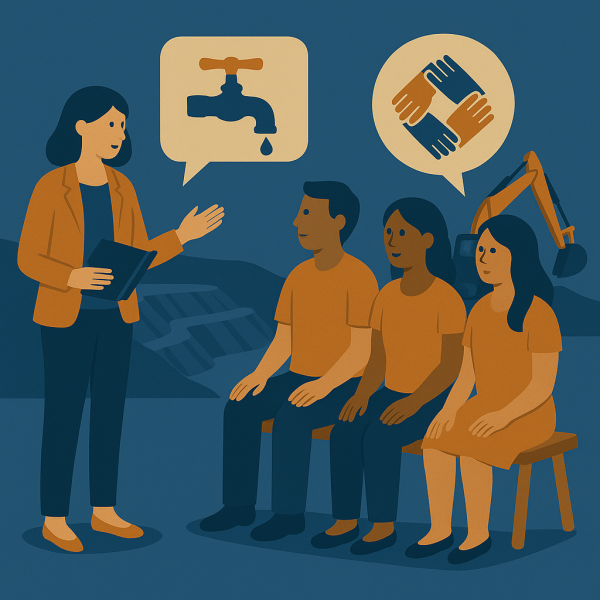
Water is often one of the most central and sensitive issues in mining–community relationships, shaping trust, long-term stewardship expectations, and perceptions of environmental risk. The Communities Study is examining how communities and Indigenous rights-holders engage with mining companies on water management and technology-related decisions, and aims to identify practices support meaningful participation and durable outcomes.
The study responds to a growing recognition that engagement on water-related issues can either build trust or contribute to conflict if not handled effectively. It addresses the social considerations and stakeholder engagement theme within the GWI “Water Wheel” and seeks to better understand the barriers communities face when participating in discussions about mine design, water use, and long-term environmental risks.
The initial phase of the project focused on interviews with experienced community leaders and practitioners to understand how engagement currently happens and where it can be improved. These interviews explored how engagement currently occurs, where it breaks down, what communities value most in water and mining-related discussions, and how water is perceived differently by technical professionals and by communities. Early findings highlight the importance of context, trust, early engagement, and meaningful listening.
Several consistent themes have emerged. Water is a priority for all communities, but it may be valued in different ways, including cultural and spiritual dimensions as well as practical and environmental considerations. Participants emphasised the need for engagement to start early in the project life cycle, for companies to understand local history and context before engaging, and for community concerns to be clearly factored into both design decisions and ongoing management systems.
The study also identified examples of good practice, including participatory water monitoring, the use of trusted third parties, expert panels, watershed councils, and the importance of plain-language communication in local languages.
A research report from this initial phase is currently being finalised and will be released shortly, including a practical list of community engagement resources. Subject to interest and support, there is potential to extend this work into a further phase to deepen the evidence base and explore how insights from communities can be more systematically integrated into mine planning, technology selection, and water stewardship practices.
This Global Water Initiative social research project is led by independent researchers Dr. Jocelyn Fraser and Dr. Nadja Kunz, with support from CEEC Premium Sponsors Agnico Eagle and Weir.